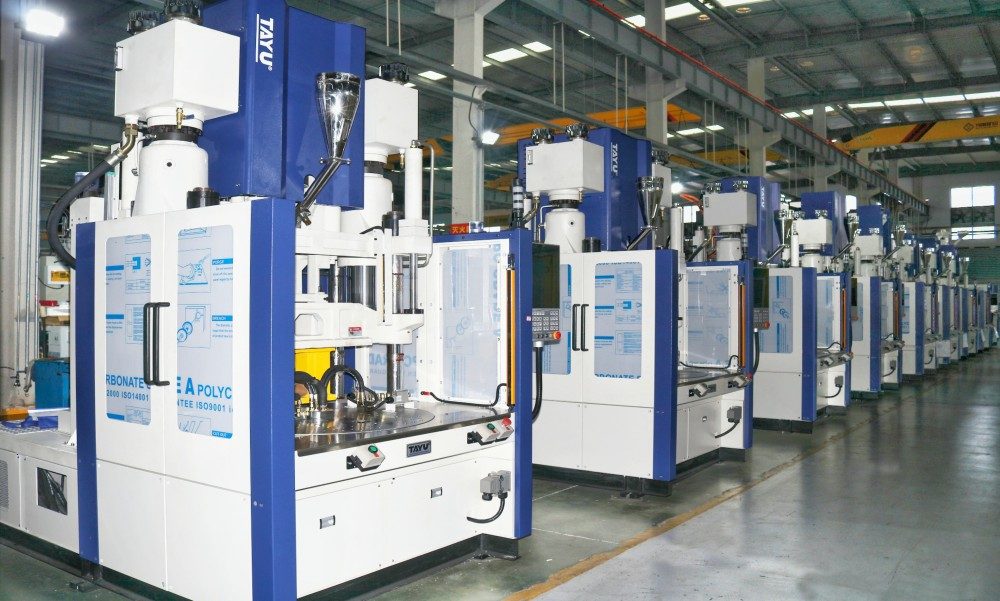
Official TAYU distributor
Insert feeding
Vibratory bowls, trays or magazines present metal and cable inserts in the right orientation, matched to the table's index time so the cell never waits on parts.
Automation
The vertical rotary table is built to be automated. Because the loading station sits open and flat, feeding, vision and take-out fit around it as one cell — designed together, not bolted on afterwards.
Rotary table cells
The rotary table brings every station to the same fixed, open position. Inserts are fed and parts are taken out while the next shot is moulding — so a feeder and a compact robot are all it takes to automate the cell.
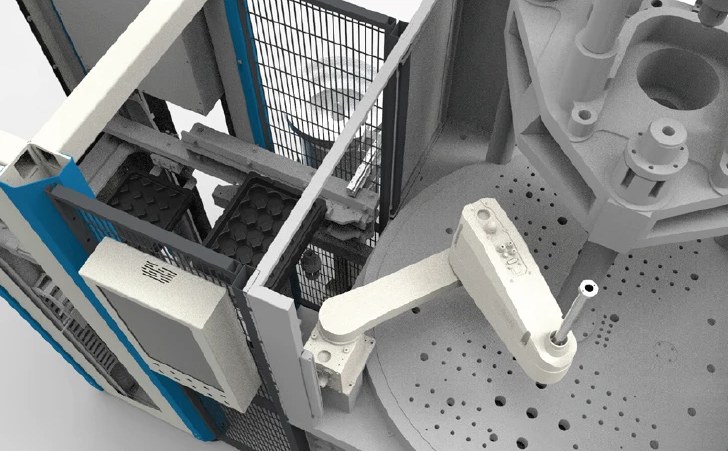
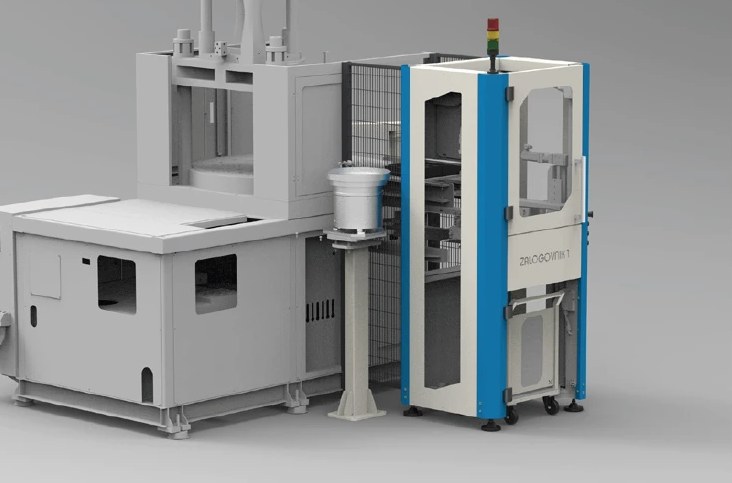
Vibratory bowls, trays or magazines present metal and cable inserts in the right orientation, matched to the table's index time so the cell never waits on parts.
A camera confirms every insert is present and correctly seated before the clamp closes. A missed or skewed insert stops the shot instead of scrapping a mould.
A servo or 6-axis robot lifts the overmoulded part clear, degates it and places it oriented onto a conveyor, tray or the next assembly step.
Why it matters
An automated vertical cell turns a bare shot into a checked, degated, oriented assembly with a repeatable cycle — the shortest path from raw insert to higher added value, with the operator supervising rather than loading.